General visit and anamnesis
Full clinical exam, weight and mucous membrane evaluation, palpation, health history of the dog and parents.



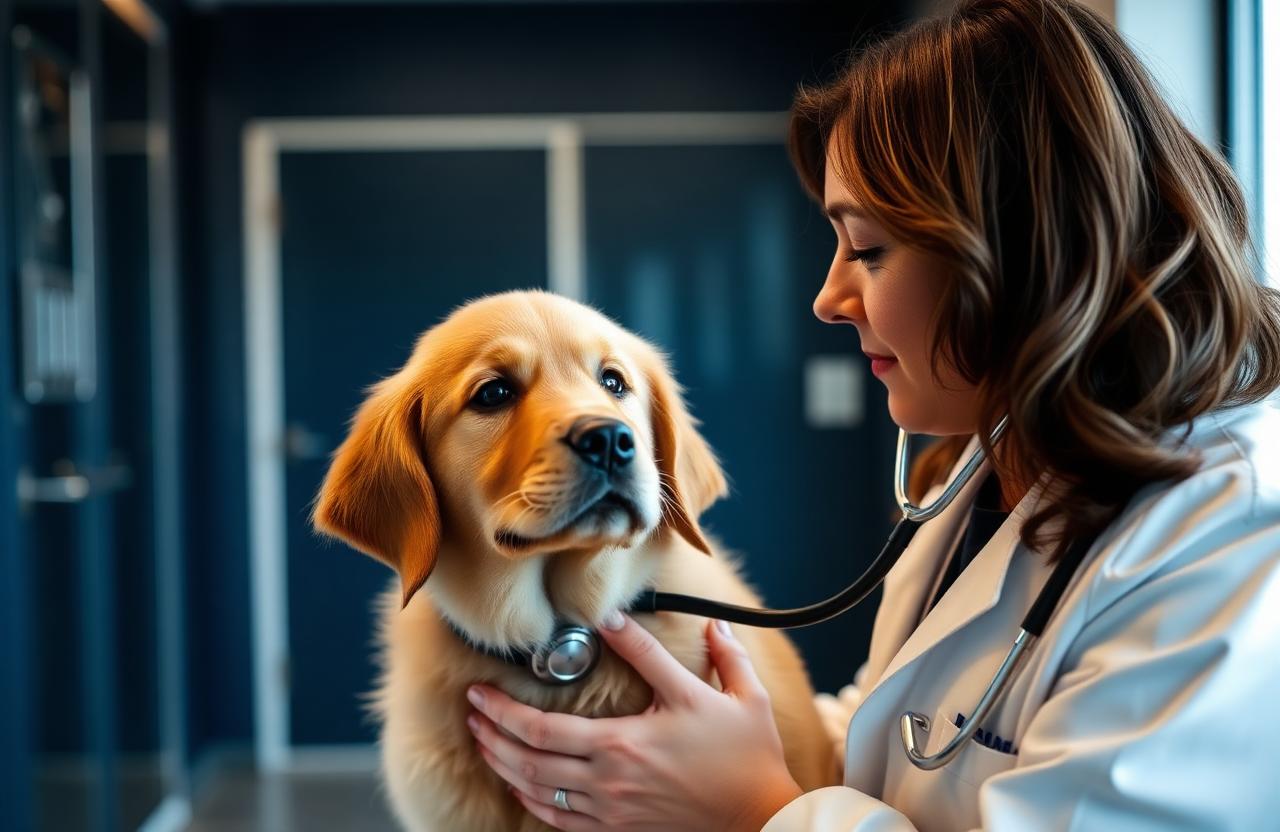

K.A.S. requires affiliated families and breeders to provide documentation of clinical veterinary screening for breeding suitability, under protocols tailored to each breed and its known hereditary conditions. Veterinarians and qualified facilities perform the examinations; K.A.S. reviews the reports, examines and verifies their content and assesses the results before deciding on breeding suitability under its association procedures.
×K.A.S. enters relevant results and breeding suitability decisions in its association registers. Where required, it includes the results in genealogical certificates, pedigree parchments, attestations and official communications within the K.A.S./WDF system. These are the relevant findings, not reproductions of complete clinical reports. Original reports are kept by the respective breeders and professionals, veterinarians or laboratories. K.A.S. reviews their content for breeding selection without operating a central document repository. It does not systematically retain complete copies of reports and is not a DNA bank or sample archive. Access and disclosure respect confidentiality and the safeguards applicable to breeders’ data.
K.A.S. requires reports of clinical veterinary breeding suitability examinations specified for each breed and its known hereditary risks. Veterinarians or qualified facilities perform the examinations; the association verifies the documentation and assesses results under the relevant protocol.
Full clinical exam, weight and mucous membrane evaluation, palpation, health history of the dog and parents.
Screening for hereditary cataract, PRA, retinal dysplasia and other breed-specific eye conditions.
Based on findings and risks, a veterinarian may recommend cardiac assessment, ECG or echocardiography. One examination does not rule out every future heart condition.
BAER test for breeds at risk of hereditary unilateral or bilateral deafness.
Hip or elbow radiography and assessment follow veterinary advice and the relevant programme’s requirements.
Patellar assessment may be particularly relevant for small breeds. A veterinarian should determine its need and interpret findings for the individual dog.
For experimental lines, examinations are selected according to the individual dog’s health risks. Colour or unusual appearance alone neither confirms nor rules out health problems.
Blood and other laboratory tests are selected according to health status and veterinary advice, not as an automatic identical panel before every mating.
Molecular DNA tests are distinct from clinical veterinary examinations and complement them where appropriate or required by applicable protocols: specific hereditary risks, identity, parentage and programmes for champions or high-profile breeding dogs. They are not universally required for every puppy. Results concern the variants or markers analysed and are interpreted in the context of the individual dog and programme.
Molecular DNA tests are distinct from clinical veterinary examinations and complement them where appropriate or required by applicable protocols: specific hereditary risks, identity, parentage and programmes for champions or high-profile breeding dogs. They are not universally required for every puppy. Results concern the variants or markers analysed and are interpreted in the context of the individual dog and programme.
Parentage testing compares genetic data from the offspring and the stated parents. Its use depends on available profiles and the specific programme’s requirements.
Tests for inherited variants are selected according to breed and family history. A laboratory result covers only the variants tested and must be considered alongside clinical findings.
Relatedness and genetic diversity are assessed using available pedigree or suitable genetic data. Binding limits should not be assumed without the specific programme’s rules.
K.A.S. enters relevant results and breeding suitability decisions in its association registers. Where required, it includes the results in genealogical certificates, pedigree parchments, attestations and official communications within the K.A.S./WDF system. These are the relevant findings, not reproductions of complete clinical reports. Original reports are kept by the respective breeders and professionals, veterinarians or laboratories. K.A.S. reviews their content for breeding selection without operating a central document repository. It does not systematically retain complete copies of reports and is not a DNA bank or sample archive. Access and disclosure respect confidentiality and the safeguards applicable to breeders’ data.
Structural assessment should also consider function and limitations. Whether it is required and how it is performed depend on the specific programme; it does not replace clinical examination.
Morphometric measurements (height at withers, length, proportions).
Evaluation of gait, bone structure and angulations in movement.
Check of dentition, jaw closure and occlusion.
Verification of real functionality with respect to the original use of the breed.
If a programme uses morphological and temperament assessment, check its method and scope. Such assessment does not replace veterinary diagnosis or guarantee future behaviour.
Reactivity to environmental, sound and visual stimuli.
Sociability towards people, other dogs and children.
Fear threshold, recovery capacity and stress management.
Working attitude, trainability and good citizen test.
Eight controlled steps, from the affiliation request to the delivery of the certified pedigree.
KAS affiliation request and signing of the ethical code.
Submission of available pedigree and health records.
K.A.S. requires reports of clinical veterinary breeding suitability examinations specified for each breed and its known hereditary risks. Veterinarians or qualified facilities perform the examinations; the association verifies the documentation and assesses results under the relevant protocol.
Molecular DNA tests are distinct from clinical veterinary examinations and complement them where appropriate or required by applicable protocols: specific hereditary risks, identity, parentage and programmes for champions or high-profile breeding dogs. They are not universally required for every puppy. Results concern the variants or markers analysed and are interpreted in the context of the individual dog and programme.
Morpho-functional and TMC assessment with qualified judge.
After reviewing the breed-specific clinical veterinary reports and assessing the results, K.A.S. decides on breeding suitability under its procedures and records the decision.
Recording relevant submitted results.
Verified health results entered in K.A.S. registers and, where required, in genealogical certificates, pedigree parchments and official K.A.S./WDF attestations.
Examinations, assessments and certificates document the findings reviewed and support responsible selection; no certificate guarantees freedom from every disease or a dog’s future health.
An association pedigree under the relevant programme’s rules.
Event participation subject to the organiser’s conditions.
Information about the relevant programme’s procedures and responsibilities.
The opportunity to check document acceptance with another registry.
Informed decisions without promises of lifelong health.
K.A.S. requires reports of clinical veterinary breeding suitability examinations specified for each breed and its known hereditary risks. Veterinarians or qualified facilities perform the examinations; the association verifies the documentation and assesses results under the relevant protocol.
Request KAS affiliation